Municipal leaders face mounting pressure to provide quality recreational facilities while managing tight budgets and maintenance costs. Traditional grass fields require constant watering, fertilizing, and reseeding: expenses that drain municipal resources year after year. Poorly installed synthetic turf, however, creates even bigger problems: drainage issues, premature wear, safety hazards, and costly repairs that taxpayers ultimately fund.
The solution lies in understanding exactly what goes into a proper synthetic turf installation from the ground up. This guide walks you through each critical phase, ensuring your municipal project delivers the durable, safe, and cost-effective results your community deserves.
Why Municipal Projects Demand Extra Attention
Municipal synthetic turf installations differ significantly from residential projects. These fields endure heavy use from multiple sports leagues, community events, and daily recreation activities. A poorly executed installation doesn't just inconvenience a single family: it impacts entire communities and strains municipal budgets for decades.
Moreover, municipal projects typically involve larger areas, complex drainage requirements, and stricter safety standards. The installation must accommodate everything from youth soccer leagues to high school football games, often on the same surface. This versatility requires precise planning and professional-grade execution that many municipalities attempt without proper guidance.
The consequences of shortcuts become expensive quickly. Inadequate drainage leads to standing water and field closures. Poor base preparation causes uneven surfaces that create injury risks. Improper turf installation results in seam separation and premature replacement needs. These issues cost municipalities thousands in repairs and lost recreation revenue.
Pre-Installation Planning: Setting Your Project Up for Success
Successful municipal turf installation begins months before any equipment arrives on-site. Start with a comprehensive site assessment that examines your specific location's challenges and requirements. Measure the installation area accurately, accounting for irregular shapes that may require additional materials or specialized cutting techniques.
Soil testing proves absolutely critical for municipal projects. Your soil's drainage capacity directly impacts the field's long-term performance and safety. Poor drainage creates standing water that damages turf backing and creates slip hazards during games. Professional soil analysis reveals whether you need extensive drainage improvements or can work with existing conditions.
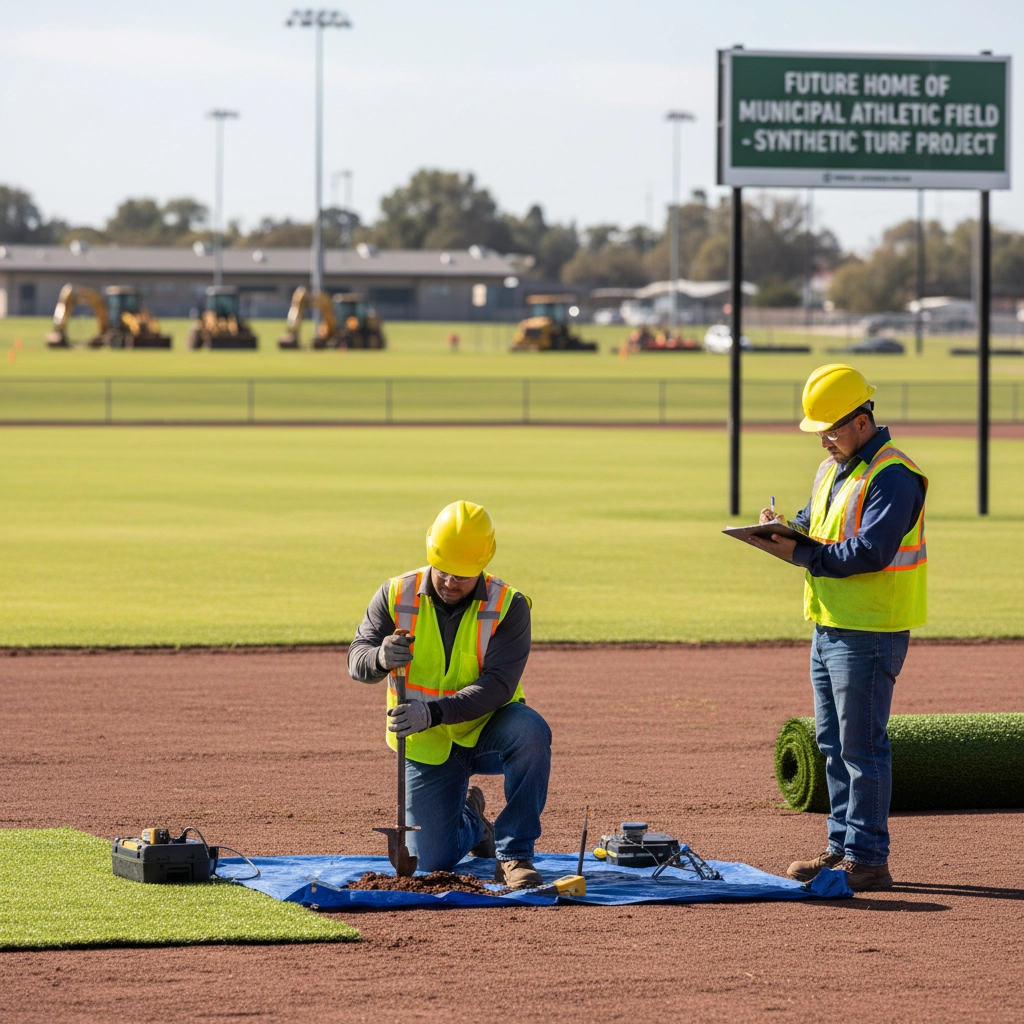
Contact your local utility marking service (call 811) at least several days before excavation begins. Municipal properties often contain complex utility networks including water lines, electrical systems, and communication cables. Accidentally damaging these utilities creates costly delays and safety hazards that extend far beyond your project timeline.
Budget for proper permits and inspections throughout the process. Municipal projects typically require building permits, environmental compliance reviews, and safety inspections at various phases. Planning for these requirements prevents costly project delays and ensures your installation meets all local regulations.
Site Preparation: Building the Foundation for Success
Site preparation makes or breaks your entire installation. Begin by completely clearing the existing surface of grass, roots, mulch, and any organic materials that could decompose and create uneven spots. Never install synthetic turf over existing grass: this shortcut guarantees drainage problems, weed growth, and an uneven playing surface that creates liability issues.
Excavate the existing soil to a depth of 2.5 to 3 inches across the entire installation area. This depth provides adequate space for your base materials while maintaining proper elevation relative to surrounding surfaces like sidewalks and buildings.
During excavation, carefully identify and relocate any existing infrastructure. Move electrical wiring, irrigation lines, and sprinkler systems at least six to eight inches away from the field perimeter. This prevents accidental damage when securing turf edges and ensures easy access for future maintenance needs.
Cap any unused sprinkler systems at the pipe level rather than just covering the sprinkler head. Inadequate capping allows water leakage that creates soft spots and drainage issues. Mark capped sprinkler locations to avoid creating depressions during base installation.
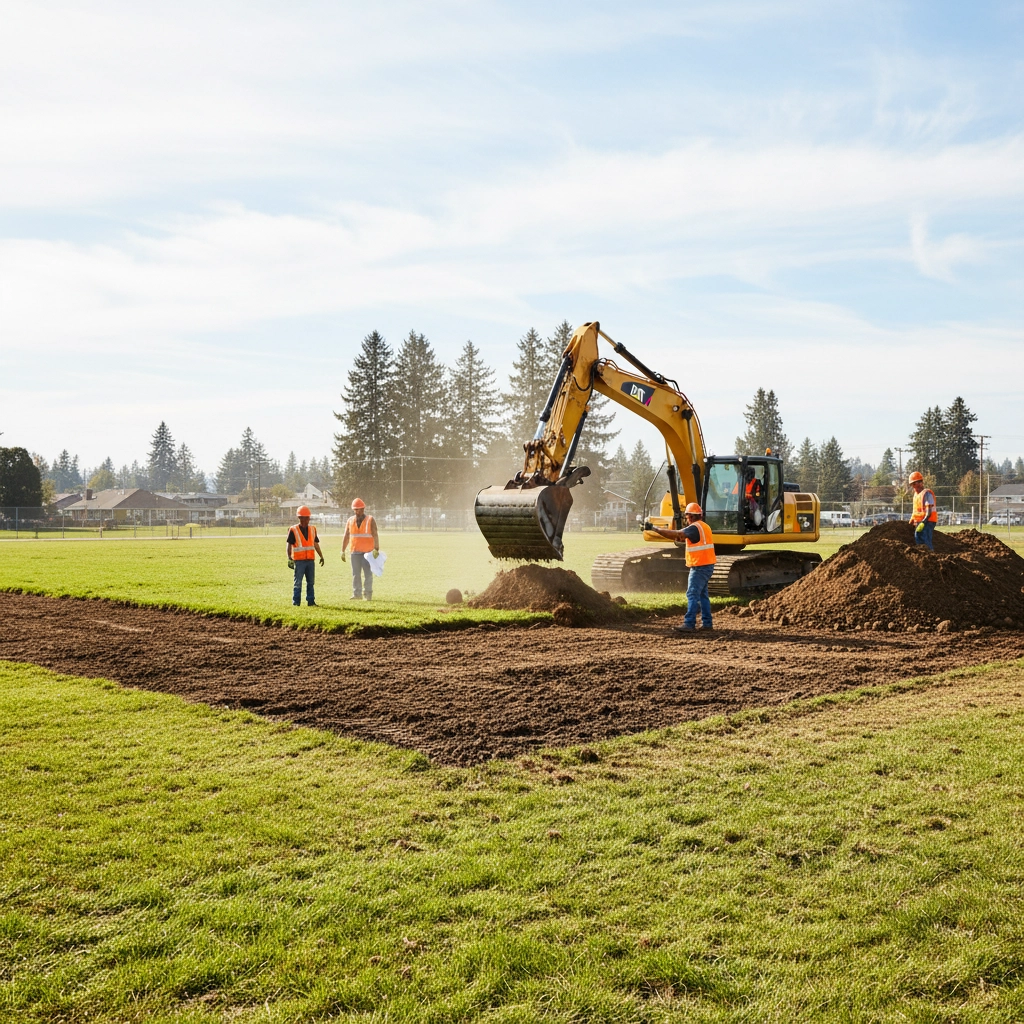
Install perimeter bender boards to create clean separation between your turf area and surrounding landscapes. This step proves particularly important for municipal installations where professional appearance reflects on your community's standards and attention to detail.
Foundation and Base Preparation: Creating Long-Term Stability
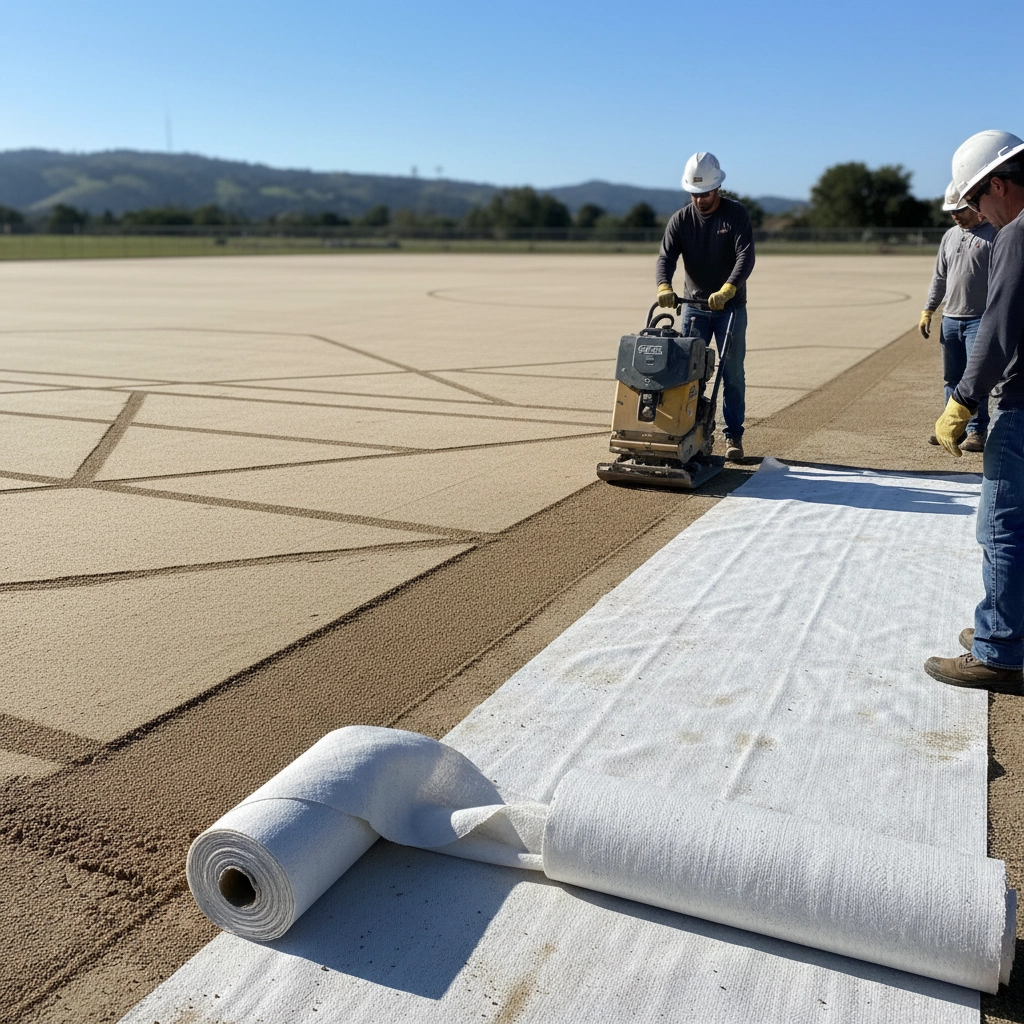
Proper base preparation ensures your synthetic turf performs reliably for its entire 15-25 year lifespan. Begin by installing a geotextile fabric barrier across the entire excavated area. This permeable barrier prevents weed growth while allowing proper drainage: both critical for municipal fields that see constant use.
Create your base layer using decomposed granite or crushed rock aggregate. This material provides the stable, well-draining foundation that supports heavy foot traffic and equipment loads. Municipal fields require a thicker base layer than residential installations: typically 2-3 inches of properly compacted aggregate.
Compact the base material using a plate compactor or similar equipment. Proper compaction eliminates air pockets and creates the firm, level surface that prevents uneven settling. Pay special attention to areas around utility covers and field perimeters where inconsistent compaction often causes problems.
Install your weed barrier fabric over the compacted base, ensuring complete coverage with no gaps. Overlap fabric edges by 6 inches and secure with galvanized landscape nails every 2-3 feet. Quality weed barrier prevents plant growth while remaining porous enough for proper drainage.
Turf Installation: Where Planning Becomes Reality
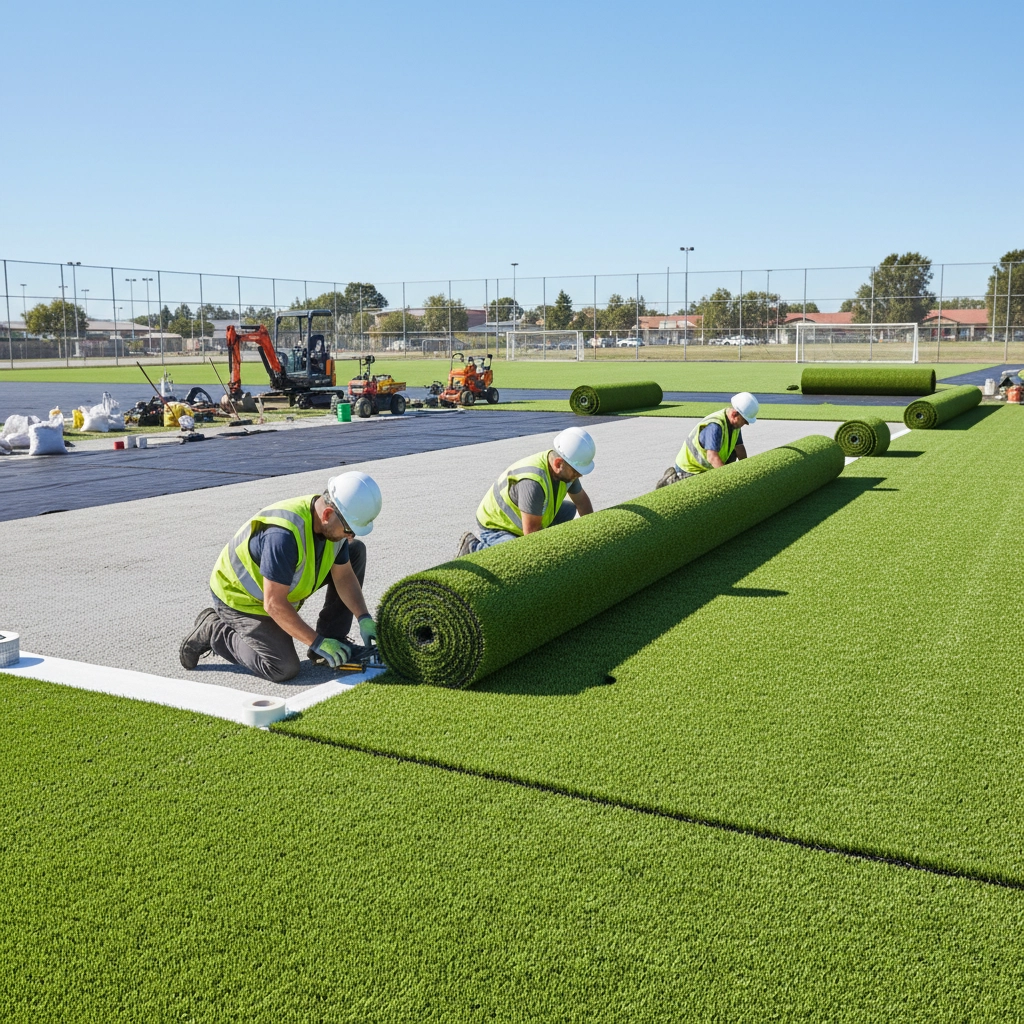
Professional turf installation transforms months of preparation into a usable playing surface. Begin by acclimating your turf material: roll it out in sunlight with blades facing down for 1-2 hours before installation. This process makes the backing more flexible and easier to work with during positioning.
Plan your turf layout to minimize seams in high-traffic areas. Municipal fields benefit from running turf grain in the direction of primary play patterns: typically goal line to goal line for soccer and football fields. This orientation maximizes turf life and maintains consistent ball roll characteristics.
Position turf sections carefully, ensuring grain direction matches across all pieces. Mismatched grain creates visible lines and inconsistent playing characteristics that affect game quality. Allow turf pieces to overlap slightly during initial positioning: you'll trim excess material after securing the primary layout.
Secure turf edges using galvanized landscape nails or specialized turf nails every 6-8 inches around the perimeter. Drive nails flush with the turf backing without over-penetrating, which can damage the backing material. Interior seams require specialized seaming tape and adhesive applied according to manufacturer specifications.
Apply infill material evenly across the installed turf using a drop spreader or specialized infill machine. Municipal fields typically require 1.5-2 pounds of infill per square foot to provide proper cushioning and blade support. Brush the turf against the grain during infill application to ensure even distribution and proper blade positioning.
Customization and Final Details
Municipal fields require specialized markings and customization that residential installations don't need. Athletic field marking involves precise measurements and durable materials that withstand constant use and weather exposure. Plan your field layout carefully, considering all sports that will use the surface.
Apply field markings using specialized turf paint designed for synthetic surfaces. Standard marking paint often fails prematurely on synthetic turf, creating maintenance headaches and unprofessional appearance. Professional-grade turf marking systems provide the durability and appearance your community expects.
Consider adding your municipality's logo or community branding elements to the field. These custom features enhance community pride and can help offset project costs through naming rights or sponsorship opportunities. Work with your turf supplier to incorporate these elements during manufacturing rather than attempting field modifications.
Install proper edge restraints around the field perimeter to prevent turf shifting and edge lifting. Municipal fields experience significant stress at edges from maintenance equipment and heavy use patterns. Quality edge restraint systems protect your investment and maintain professional appearance throughout the turf's lifespan.
Long-Term Success Through Proper Planning
Proper synthetic turf installation provides municipalities with decades of reliable service when executed correctly. The key lies in understanding that every step: from initial site assessment through final infill application: directly impacts your field's long-term performance and maintenance requirements.
Municipal projects demand higher standards than residential installations because the consequences of failure extend throughout entire communities. By following proven installation procedures and refusing to cut corners on critical steps like base preparation and drainage, your synthetic turf investment delivers the performance and durability your community deserves.
Remember that professional installation often proves more cost-effective than attempting complex municipal projects without proper expertise. The long-term costs of installation errors far exceed the initial investment in professional services, making expert guidance a wise investment in your community's future recreation needs.
Ready to move forward with your municipal synthetic turf project? Elite Play Solutions specializes in large-scale installations that meet municipal standards for durability, safety, and performance. Contact us to discuss your specific project requirements and ensure your installation delivers the results your community expects.