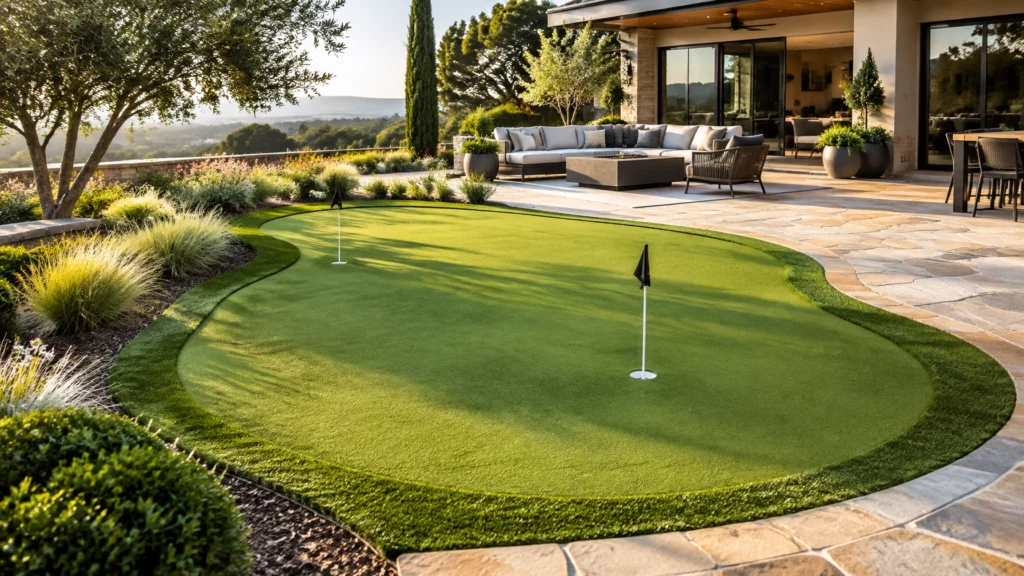
A backyard can be more than a lawn, patio, and a few scattered landscape beds. When it is thoughtfully designed, it becomes an extension of the home, a place to relax, entertain, and enjoy time outdoors.
A beautiful backyard putting green brings all of those qualities together. It provides a dedicated space for practice, but it also becomes a visual centerpiece that adds shape, texture, and purpose to the landscape. With the right design, a putting green feels less like a separate recreational feature and more like a natural part of the property.
The difference comes down to planning. The shape, contours, surrounding plantings, lighting, edging, and turf quality all work together to create a polished finish. A well-designed green looks beautiful during the day, feels inviting in the evening, and provides year-round enjoyment for the entire household.
Start With a Design That Fits the Yard
The most attractive backyard putting greens are designed around the property instead of forced into an available space. Before selecting turf, consider how the green relates to the home, patio, pool, garden beds, and existing walkways.
An organic shape often creates a more natural and luxurious appearance than a simple rectangle. Kidney, oval, curved, and free-form layouts soften the look of the installation and allow the green to follow the natural lines of the yard.
For a smaller property, a compact design can still make a strong impression. A corner green, narrow putting strip, or one- to three-hole layout provides useful practice space without overwhelming the landscape. In a larger yard, the design can include:
- Multiple cup locations
- A fringe or chipping area
- Small elevation changes
- A decorative bunker
- A seating or viewing area
- A pathway connecting the green to the patio
The best layout balances beauty and function. It gives the green enough room to feel intentional while leaving space for planting, entertaining, and everyday movement through the yard.
Use Contours to Create Visual Interest
A perfectly flat green may be simple to install, but gentle contours create a more natural appearance and a more enjoyable playing experience. Subtle breaks, small mounds, and modest slopes make the green look like a professionally designed golf feature rather than a flat patch of synthetic grass.
Contours also add variety to practice. A golfer can work on straight putts, breaking putts, uphill approaches, and downhill speed control. The design does not need to be dramatic to be effective. Small changes in elevation create visual depth without making the green difficult to use.
Proper grading is equally important. The base must support the desired contours while directing water away from the surface. Good drainage helps prevent puddling, protects the foundation, and supports the long-term appearance of the synthetic turf.
This is where professional planning matters. During a synthetic turf installation, careful preparation beneath the surface is just as important as the visible finish above it.

Choose Materials That Create a Refined Finish
A beautiful putting green depends on more than color. The turf needs to provide a clean appearance, consistent ball roll, and a realistic transition between the putting surface and the surrounding landscape.
Golf-specific synthetic turf typically uses a short, dense pile that creates a smooth putting surface. The surrounding fringe or rough can use a slightly different texture or height to define the green and add visual contrast.
A high-quality installation should also include:
- Durable, UV-resistant turf fibers
- A stable, well-compacted base
- Reliable drainage
- Secure seams and edges
- Properly leveled cups
- Recommended infill for surface stability
- Clean transitions to hardscape and planting beds
The visible details matter. Crisp edges, even turf, natural-looking color variation, and carefully placed cups give the green a finished, custom appearance.
Stone is a popular edging material because it adds permanence and texture. Flagstone, limestone, river rock, and pavers can create either a natural garden look or a clean contemporary border. Metal edging offers a slimmer profile for modern landscapes, while mulch and low groundcover create softer transitions.
Quality materials provide more than a beautiful first impression. They support durability, easier maintenance, and a consistent appearance over time.
Integrate the Green With the Landscape
The surrounding landscape determines whether a putting green feels connected to the property. Without thoughtful planting, the turf can look isolated. With the right plant palette, it becomes part of a cohesive outdoor room.
Use plants to frame the green without blocking play or creating excessive shade. Ornamental grasses, low shrubs, native perennials, and evergreen accents provide texture and structure around the perimeter. A layered planting design creates depth:
- Low groundcovers soften the turf edge.
- Ornamental grasses add movement and height.
- Shrubs create definition and privacy.
- Small trees provide visual framing and seasonal interest.
- Decorative boulders add natural contrast.
Choose plants that suit the local climate and the amount of sunlight available. Low-maintenance and drought-tolerant varieties reduce ongoing work while maintaining a polished appearance.
A pathway also improves the design. Stone steppers, pavers, or decomposed granite can lead from the patio to the putting green and create a clear transition between entertaining and recreation areas. The path protects nearby planting beds from foot traffic and makes the green feel like a destination.
For a resort-style backyard, consider pairing the green with a pool deck, pergola, outdoor kitchen, fire feature, or lounge area. The goal is not to fill every open space. The goal is to create a balanced setting where every feature has a purpose.
Add Lighting for Evening Beauty
Outdoor lighting extends the use of a backyard putting green and allows the feature to remain visually appealing after sunset.
Low-voltage LED path lights can define walkways and make the area safer to navigate. Recessed or in-ground fixtures can highlight the perimeter without creating a distracting glare across the putting surface. Warm accent lighting can draw attention to trees, boulders, planting beds, or architectural walls.
A layered lighting plan often works best:
- Path lighting guides movement around the green.
- Accent lighting highlights trees and landscape features.
- Perimeter lighting defines the shape of the putting surface.
- Patio lighting supports seating and entertaining.
- Cup-area lighting provides focused visibility for evening practice.
Lighting should enhance the experience, not overpower it. Fixtures need careful placement so they do not shine directly into players’ eyes or create harsh shadows across the green.
The result is a backyard that feels welcoming well into the evening. The putting green becomes part of the outdoor atmosphere, even when no one is playing.

Create a Space People Want to Use
A putting green is a recreational feature, but its value extends beyond golf practice. It gives family and guests a reason to spend more time outdoors.
Add comfortable seating nearby so people can watch, talk, and relax between turns. A built-in bench, lounge chairs, or a shaded pergola makes the space more inviting. A fire feature or outdoor bar can turn the green into part of a larger entertainment area.
The space can also serve different age groups and skill levels. Adults can practice putting and chipping, while children can enjoy casual games and friendly competitions. When the design includes seating, lighting, and attractive landscaping, non-golfers still benefit from the environment.
This is what makes a backyard putting green such a strong outdoor upgrade. It combines personal enjoyment with entertaining value. It adds function without sacrificing beauty.

Why Professional Installation Matters
A putting green may look simple on the surface, but its performance depends on the work beneath it. Excavation, base preparation, grading, drainage, cup placement, turf fitting, edging, and infill all affect the final result.
Professional synthetic turf installation helps ensure that the green looks finished and performs as intended. Elite Play Solutions brings experience with synthetic turf systems, site planning, material selection, and detailed installation work for outdoor recreational spaces.
The process begins with understanding the property and the homeowner’s goals. From there, the layout can be shaped around the available space, existing features, drainage needs, and desired style. This approach creates a green that feels custom rather than generic.
A successful project provides:
- A stable and well-drained foundation
- Smooth, consistent ball roll
- Durable turf and secure edges
- Clean integration with landscaping
- Reduced routine lawn maintenance
- A finished appearance that complements the home
If you are considering a backyard putting green, contact Elite Play Solutions for a project consultation. A thoughtful plan turns an open area of the yard into a beautiful, useful outdoor destination.
Make the Green the Heart of Your Outdoor Space
A backyard putting green is more than a place to practice. It is a design opportunity.
With an organic layout, gentle contours, quality materials, layered plantings, warm lighting, and comfortable gathering areas, the green becomes the centerpiece your outdoor space deserves. It adds color and structure to the landscape. It supports active recreation. It creates a natural setting for entertaining and relaxing.
Most importantly, a well-designed green provides lasting value through everyday use. It looks beautiful from the patio, feels inviting after dark, and gives your household a reason to enjoy the backyard more often.
The right synthetic turf installation brings the entire vision together: beautiful, durable, functional, and designed specifically for the way you live outdoors.