School playgrounds are more than just recess spaces. They're where kids build social skills, develop physical coordination, and learn how to navigate challenges: both literally and figuratively. Yet too many elementary schools are stuck with outdated playground designs that don't meet modern safety standards, exclude students with disabilities, or fail to engage kids in meaningful play.
If you're a school administrator or architect planning a playground project, the stakes are high. You need a design that keeps kids safe, meets ADA compliance requirements, and creates an environment where every student can participate. This means making smart choices about equipment selection, surfacing materials, and overall layout.
Let's break down what makes an elementary school playground actually work.
Why Playground Design Matters More Than You Think
A poorly designed playground creates problems that ripple through your entire school community. Kids get injured on inappropriate equipment or inadequate safety surfacing. Students with mobility challenges sit on the sidelines because accessible pathways don't exist. Teachers struggle to supervise play areas with blind spots and confusing layouts.
The result? Higher injury rates, potential liability issues, and lost opportunities for inclusive play that benefits all students.
A well-designed playground solves these problems upfront. It provides age-appropriate challenges, creates clear sight lines for supervision, and ensures every student can access play opportunities regardless of their abilities. This isn't just about checking boxes: it's about creating a space that genuinely supports child development.
Start With Safety and Accessibility Requirements
Before you think about swings or climbing structures, you need to understand the legal requirements that govern playground design. All U.S. playgrounds must meet Americans with Disabilities Act (ADA) guidelines and United States Consumer Product Safety Commission (USCPSC) standards.
Here's what ADA compliance actually requires:
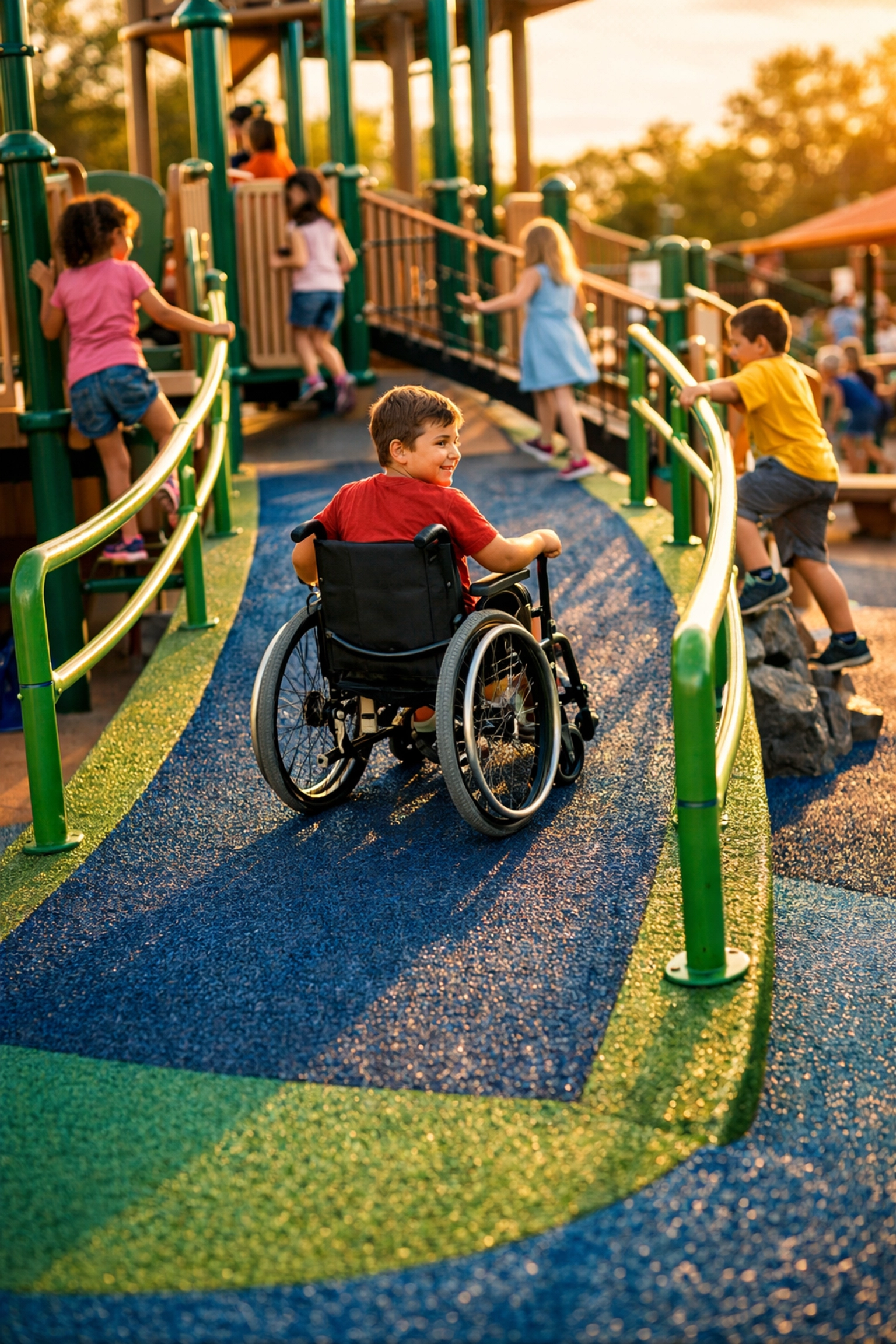
- Accessible pathways leading to all play components, including sandboxes and the base of slides
- Accessible ramps providing entry to elevated play areas
- At least 25% of ground-level play activities accessible to children using wheelchairs
- A minimum of 50% of elevated play areas reachable by students with disabilities
These aren't optional features. They're baseline requirements that ensure your playground serves all students. Moreover, designing for accessibility from the start costs significantly less than retrofitting an existing playground later.
USCPSC guidelines add another layer of safety requirements covering equipment heights, spacing between structures, and fall zones. For elementary-age children, this means avoiding equipment designed for older kids: like chain walks, arch climbers, and vertical sliding poles: that create unnecessary injury risks for younger students.
Ground Surfacing Makes or Breaks Safety
The surface underneath playground equipment is the single most important safety feature in your design. Falls account for the majority of playground injuries, and the right surfacing material dramatically reduces the severity of those falls.
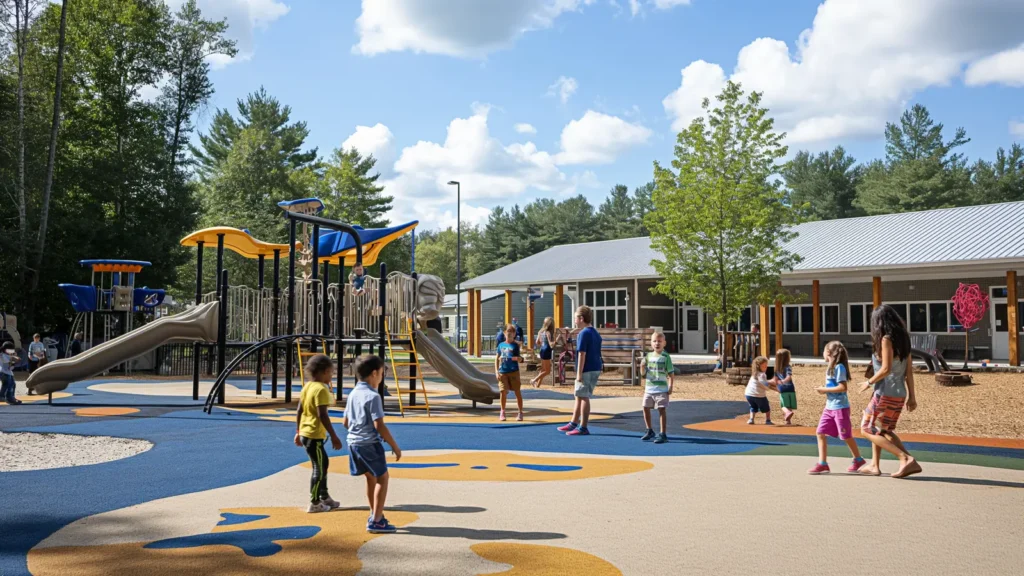
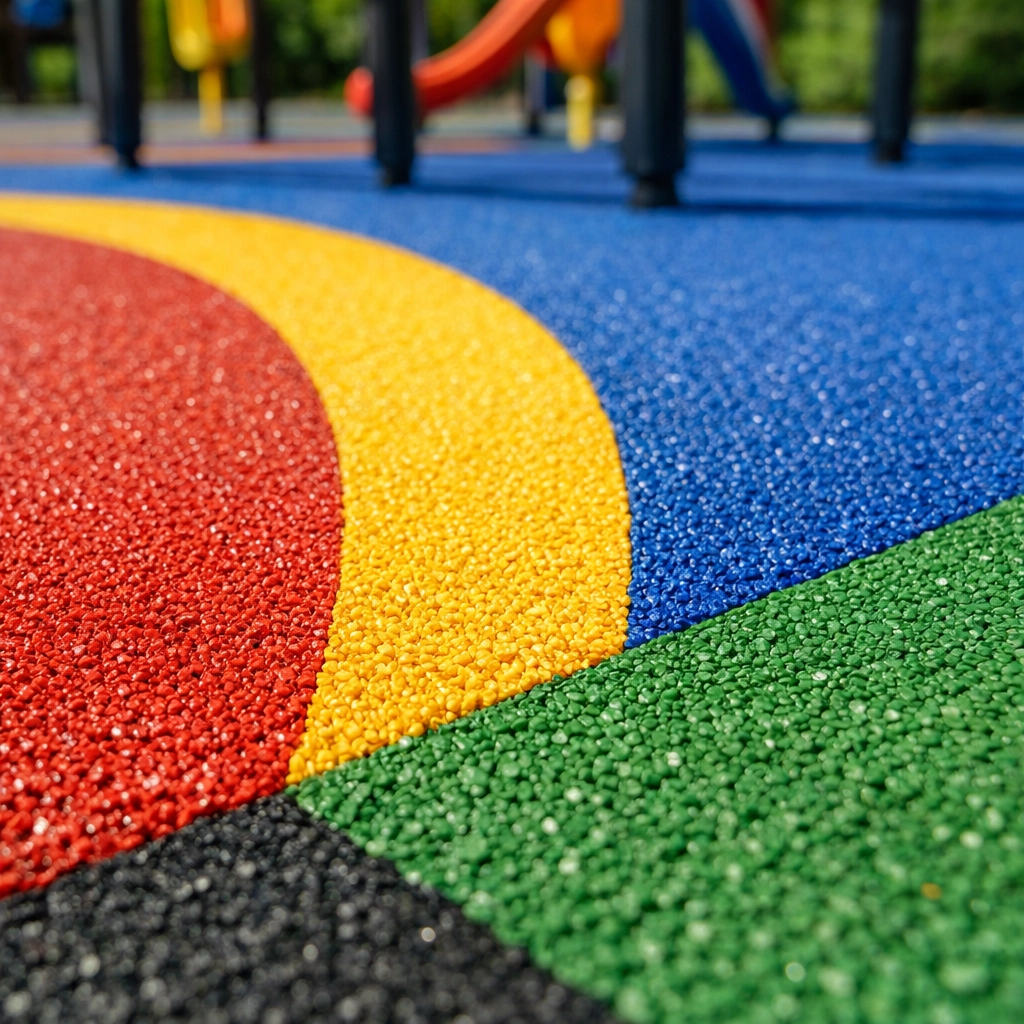
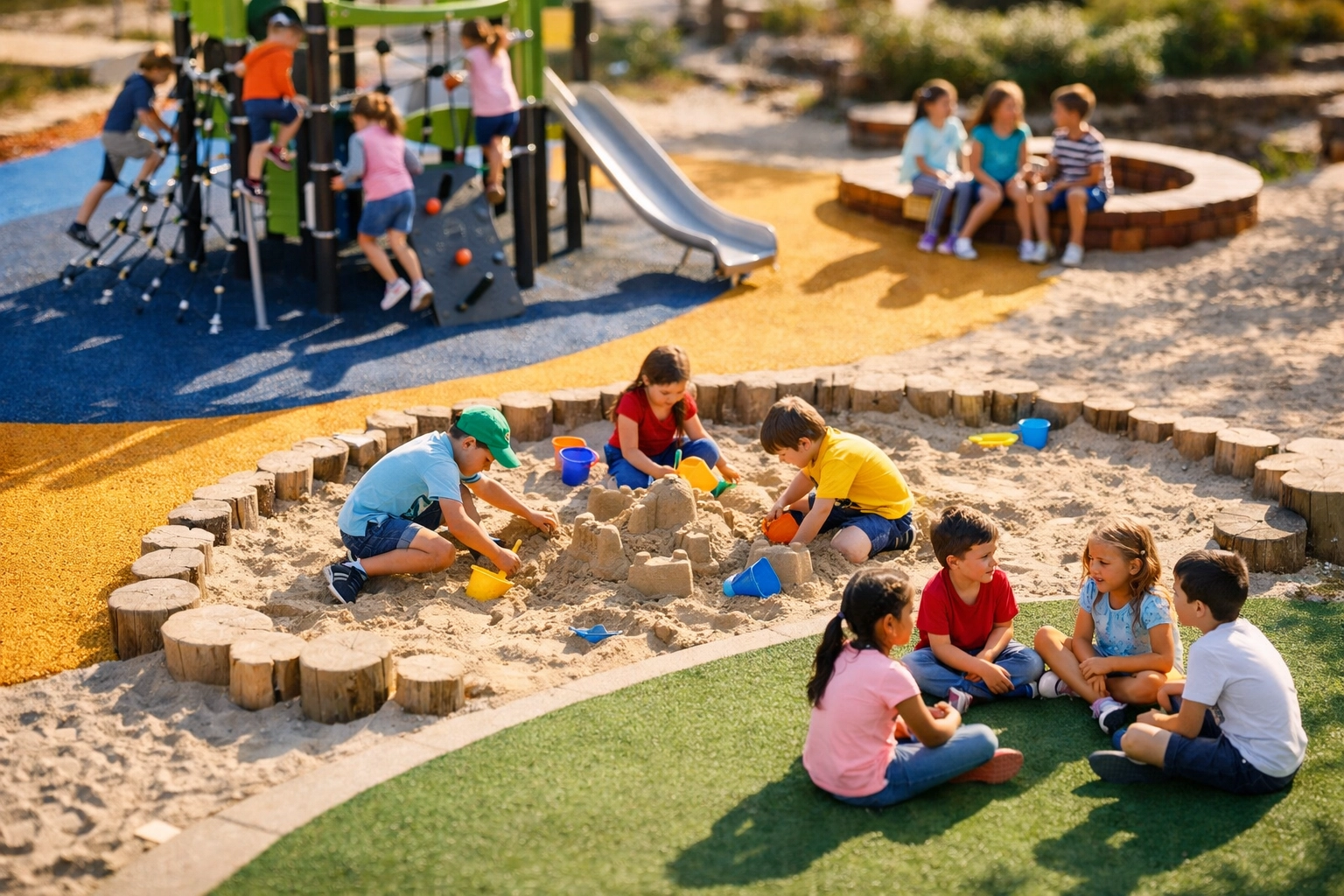
Poured-in-place rubber surfacing is the gold standard for elementary school playgrounds. This material provides consistent shock absorption across the entire play area, creates a smooth surface for wheelchair accessibility, and stands up to heavy use year after year. The rubber surface bonds directly to the base layer, eliminating gaps or uneven spots where kids might trip.
At Elite Play Solutions, we install poured-in-place rubber surfacing that meets fall height requirements while providing the accessibility features ADA mandates. The material comes in multiple colors, allowing you to create designated play zones or incorporate your school colors into the design.
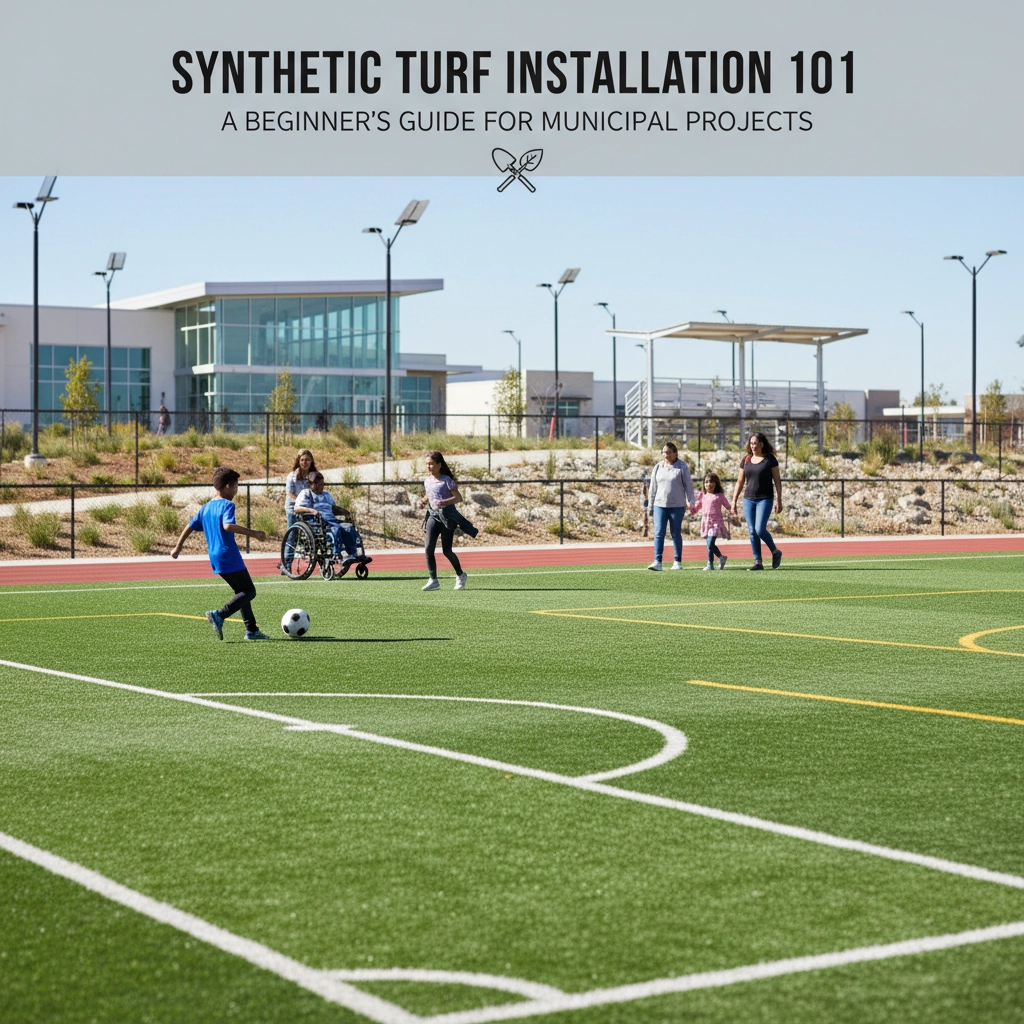
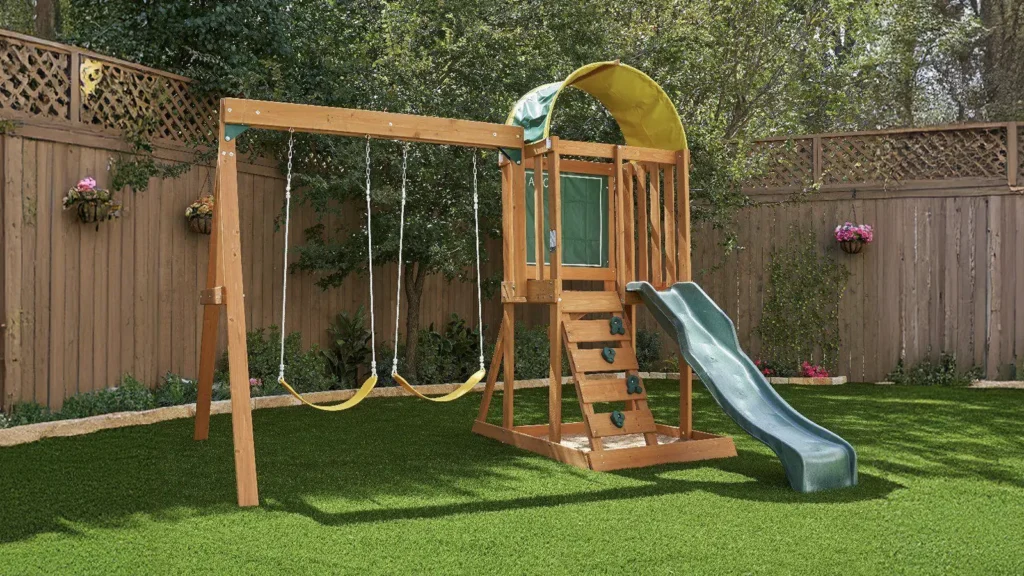
Synthetic turf offers another excellent option, particularly for multi-use areas where you want a natural grass appearance. Modern synthetic turf systems include shock-absorbing underlayment that provides fall protection while creating a surface that works for both structured play equipment and open play activities. This versatility makes synthetic turf particularly valuable for schools with limited space that need their playground to serve multiple functions.
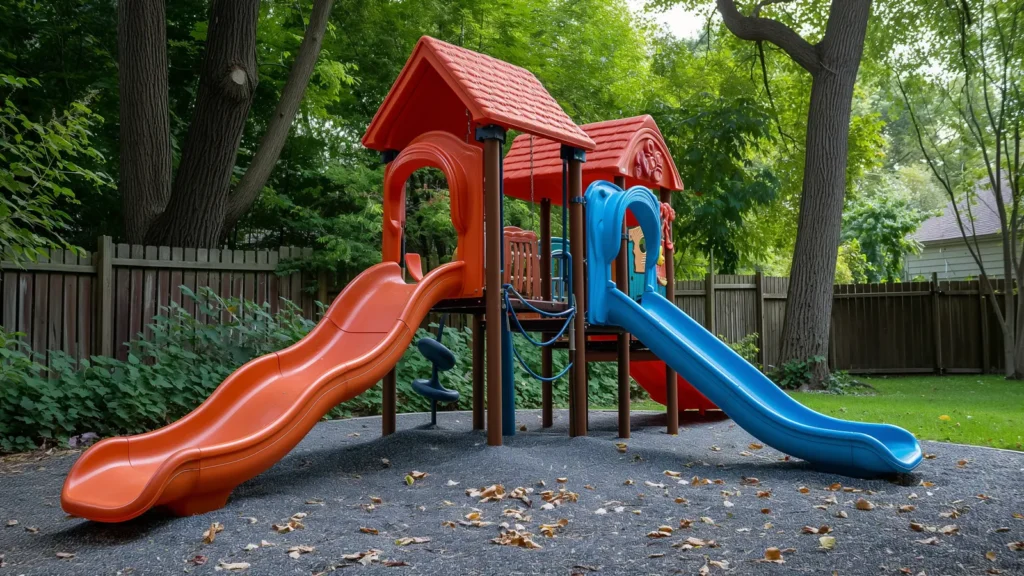
Traditional loose-fill materials like wood chips or pea gravel cost less initially but create ongoing maintenance challenges. These materials shift over time, creating bare spots under high-use areas like swings. They also create accessibility barriers for students using wheelchairs or other mobility devices. The money you save upfront gets spent on regular maintenance and eventual replacement.
Your safety surfacing needs to extend at least six feet beyond all equipment in every direction. For equipment taller than four feet, you may need to extend the safety surfacing even further based on the maximum fall height.
Design for Different Play Types
Elementary school students have diverse play preferences and developmental needs. Your playground design should accommodate multiple play styles happening simultaneously.
Active play areas feature climbing structures, swings, and slides that develop gross motor skills and physical fitness. These elements naturally attract high-energy students who need space to run, jump, and challenge themselves physically.
Creative play zones incorporate sand areas, musical elements, and manipulative features that encourage imaginative play and problem-solving. These spaces appeal to students who prefer quieter, more focused activities.
Social gathering spots provide places for conversation and group activities. Simple elements like balance beams, low climbing rocks, or circular seating arrangements create opportunities for cooperative play and social skill development.
This variety ensures that students with different interests, abilities, and energy levels all find engaging play opportunities. It also reduces wait times and conflicts over popular equipment by distributing students across multiple activity types.
Site Analysis Determines Layout Success
Before finalizing any design, conduct a thorough analysis of your specific site conditions. The playground location itself shapes what design elements will work and where they should go.
Evaluate sun exposure patterns throughout the school day. Areas with full afternoon sun in southern climates need shade structures to remain usable during warmer months. Conversely, shaded areas in northern climates may stay muddy or icy longer, requiring drainage solutions or different surfacing approaches.
Examine existing vegetation that might be preserved and incorporated into the design. Mature trees provide natural shade and sensory interest, but their root systems affect surfacing installation and may create trip hazards if not properly addressed.
Check soil conditions and site grading. Proper drainage is essential for maintaining safety surfacing and preventing standing water that creates slip hazards or breeding grounds for mosquitoes. Sites with significant slopes may need retaining walls or terracing to create level play areas.
Consider proximity to buildings, parking areas, and pedestrian pathways. Your playground needs clear, accessible routes from school entrances, but equipment should be positioned far enough from windows to minimize noise disruption to classrooms.
Equipment Selection for Elementary Ages
Equipment appropriate for elementary students looks different from equipment designed for preschoolers or middle schoolers. Elementary-age children: roughly 5 to 12 years old: need challenges that match their developing coordination, strength, and risk assessment abilities.
Climbing structures should offer multiple difficulty levels so both younger and older elementary students find appropriate challenges. Structures with varied climbing routes and heights accommodate different skill levels while promoting parallel play where students support each other's efforts.
Swings remain popular across all elementary ages, but the swing zone requires careful planning. Each swing needs adequate fall zone space: at least twice the height of the swing beam extending forward and backward. Belt-style swings are safer than rigid seat options for elementary students.
Slides work well for elementary playgrounds when properly sized. Straight slides, spiral slides, and wave slides create variety and reduce wait times. The platform height should match the capabilities and supervision realities of your student population.
Ground-level play elements are essential for accessibility and for students who prefer low-physical-risk activities. Musical instruments, sensory panels, and manipulative features engage students at ground level while meeting ADA ground-level play requirements.
Avoid equipment designed for older children or adults. Overhead rings, vertical sliding poles exceeding standard heights, and equipment requiring significant upper body strength create injury risks for elementary students who lack the physical development to use them safely.
Create Clear Supervision Zones
Teachers and playground monitors need to see all play areas clearly from multiple vantage points. Design your layout to eliminate blind spots behind equipment or structures where students might engage in unsafe behavior without adult awareness.
Position equipment in clusters by activity type while maintaining sight lines between zones. This grouping allows supervisors to monitor specific areas while remaining aware of the broader playground environment.
Include seating for supervising adults positioned strategically throughout the playground. Adults who can sit comfortably are more likely to maintain consistent supervision throughout recess periods. These seating areas should face toward major play structures and activity zones.
Post clear signage designating age-appropriate zones if your playground serves students across wide age ranges. Visual markers help both students and supervisors understand where different grade levels should play, reducing conflicts and keeping younger students away from equipment designed for older kids.
Budget for Long-Term Value
Playground design involves balancing immediate costs against long-term value and maintenance requirements. The cheapest initial option rarely proves most cost-effective over the playground's lifespan.
Quality safety surfacing like poured-in-place rubber or properly installed synthetic turf costs more upfront but requires minimal maintenance and lasts 10-15 years or longer. Loose-fill materials need regular replenishment, raking, and eventual complete replacement, with ongoing labor costs adding up over time.
Commercial-grade equipment designed specifically for school use withstands heavier use and more severe weather than residential playground equipment. Components made from durable materials like powder-coated steel and UV-resistant plastic maintain their structural integrity and appearance longer, reducing replacement costs.
ADA-compliant design from the start avoids expensive retrofitting projects later. Adding accessible pathways, ramps, and ground-level play elements to an existing playground costs significantly more than incorporating these features into the initial design.
Make Your Playground Project Successful
The best elementary school playground designs balance safety requirements, accessibility standards, developmental appropriateness, and budget realities. By focusing on quality surfacing materials, age-appropriate equipment, inclusive design features, and practical site considerations, you create a space that serves your school community for years.
Whether you're planning a complete playground replacement or upgrading specific elements, starting with clear goals and a thorough understanding of design principles ensures your investment delivers lasting value. At Elite Play Solutions, we work with school administrators and architects to design and install playgrounds that meet all safety and accessibility requirements while creating engaging play environments elementary students actually want to use.
The right playground design isn't just about meeting regulations; it's about creating opportunities for every student to play, learn, and grow together.