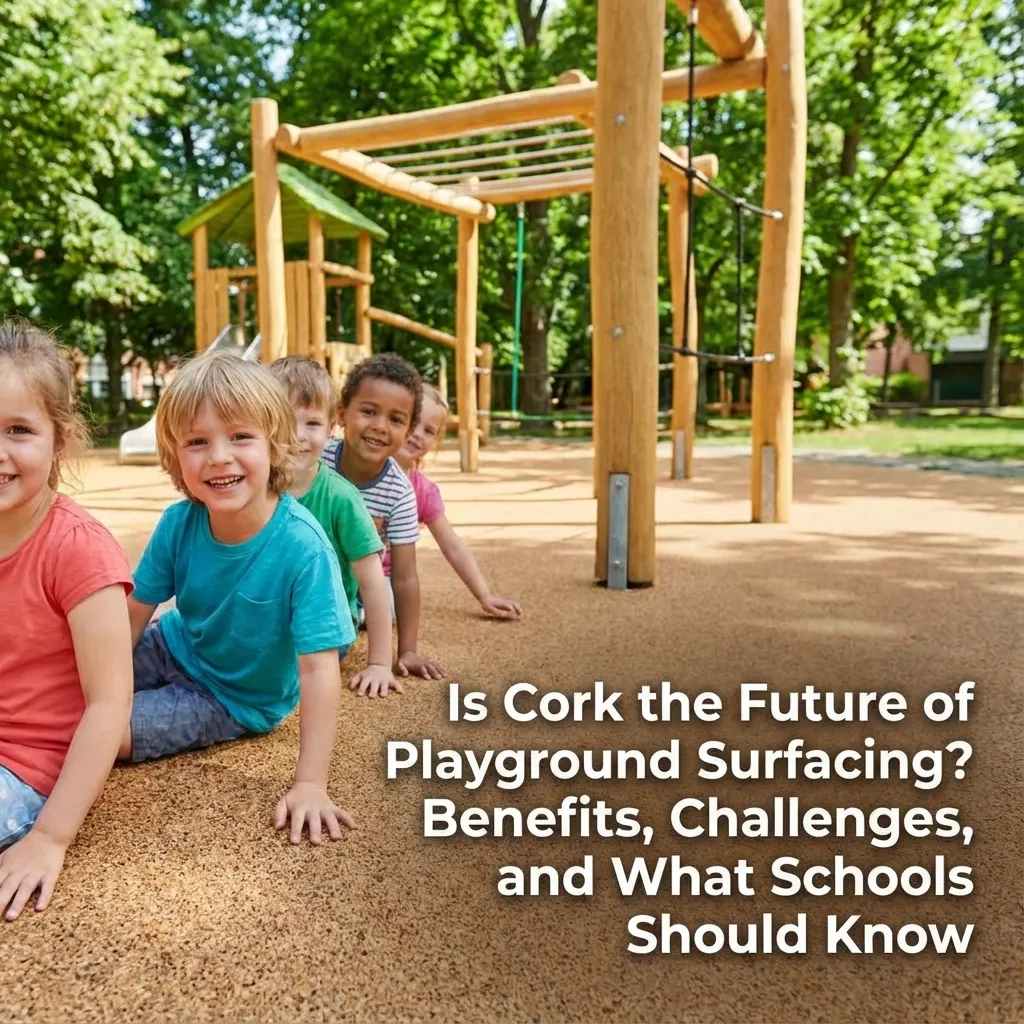
School administrators and facility managers face an increasingly complex challenge when selecting playground surfacing materials. Traditional options often force you to choose between safety performance and environmental responsibility, between durability and sustainability, between upfront costs and long-term value. Many conventional surfaces struggle with temperature management, drainage issues, and environmental impact concerns that create ongoing headaches for schools trying to balance student safety with budget constraints.
The playground surfacing industry has long been dominated by materials that, while functional, present significant drawbacks. Poured-in-place rubber surfaces can become scorching hot in summer months, making playgrounds unusable during peak hours. Loose-fill materials like wood chips require constant maintenance and replacement. Synthetic surfaces often contain chemicals that raise health concerns and create environmental waste at the end of their lifecycle.
Understanding Cork as a Playground Surface
Cork surfacing represents a breakthrough in playground design, utilizing the natural properties of cork oak bark to create a surface that addresses many traditional surfacing challenges. This isn’t simply ground cork scattered on the ground – modern cork surfacing systems use engineered cork granules bound together to create a durable, unified surface that meets rigorous safety standards.
The material comes from cork oak forests, where bark is harvested without harming the trees. This renewable resource regenerates over 9-year cycles, making cork one of the most sustainable materials available for playground applications. The harvesting process actually benefits the trees, encouraging healthy growth and increased carbon sequestration.
Environmental Advantages That Matter
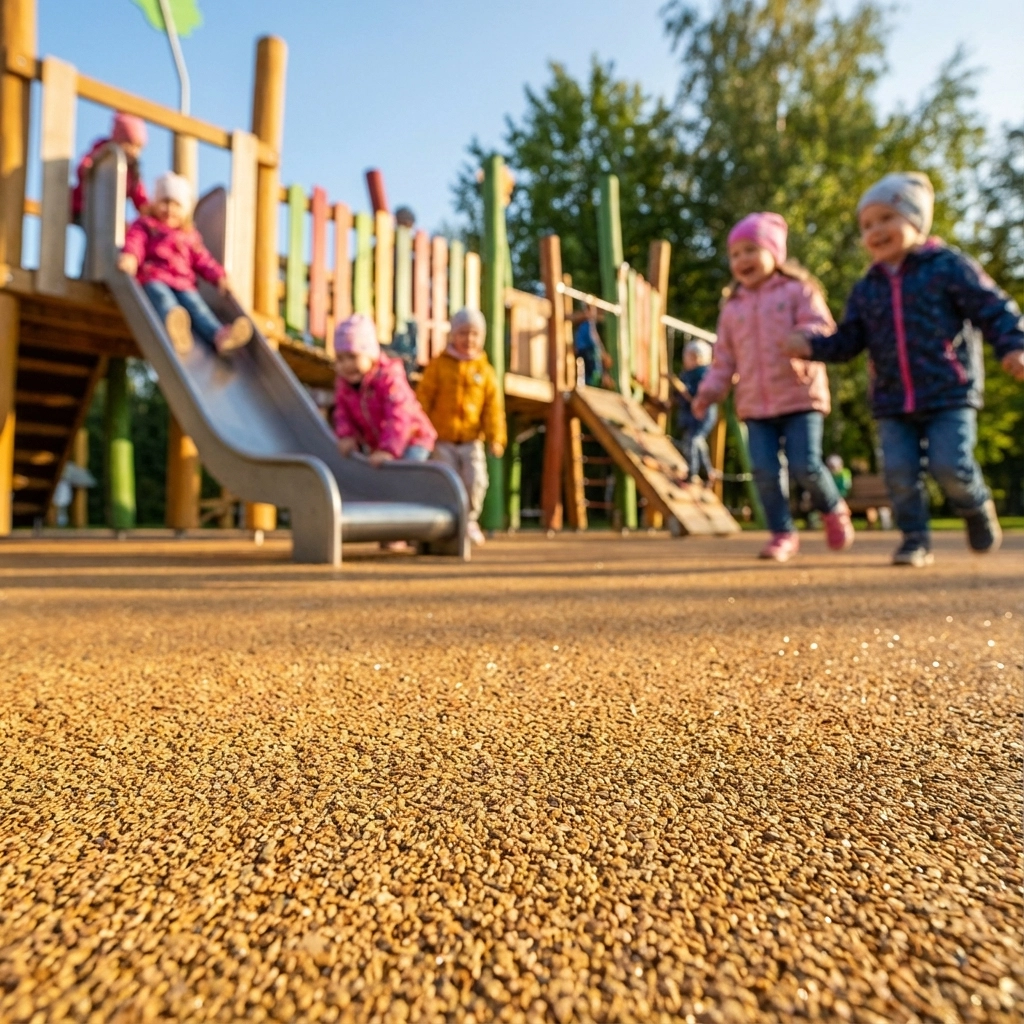
Cork surfacing delivers environmental benefits that extend far beyond typical “green” materials. For every ton of cork produced, cork oak forests sequester approximately 73 tons of carbon dioxide from the atmosphere. This means cork surfaces are carbon-negative throughout their lifecycle, actively removing more carbon than they generate during production and installation.
The sustainability profile extends to end-of-life considerations. Cork surfaces are fully recyclable, supporting circular economy principles that many schools are adopting as part of their environmental initiatives. Unlike synthetic alternatives, cork contains no heavy metals, toxic chemicals, microplastics, or endocrine disruptors that could pose health risks to children or environmental contamination concerns.
Schools implementing sustainability programs find cork surfacing provides a tangible demonstration of environmental stewardship. Students, parents, and community members can see concrete evidence of the school’s commitment to responsible environmental practices every time they visit the playground.
Safety Performance That Protects Children
Safety performance represents the primary concern for any playground surfacing material. Cork surfacing meets and exceeds established safety standards, including ASTM 1292 testing protocols that measure critical fall height protection. The material’s natural elasticity creates effective impact absorption, reducing injury risk from falls while maintaining surface stability for regular play activities.
The safety benefits extend beyond impact protection. Cork’s natural texture provides high friction coefficients, creating slip-resistant surfaces that remain stable even when wet. This characteristic proves particularly valuable in climates with frequent precipitation or for playgrounds near water features.
Cork surfaces maintain consistent safety performance across temperature variations. Unlike some synthetic materials that become harder and less impact-absorbing in cold weather, cork retains its cushioning properties throughout seasonal temperature changes.
Practical Benefits for Daily Operations
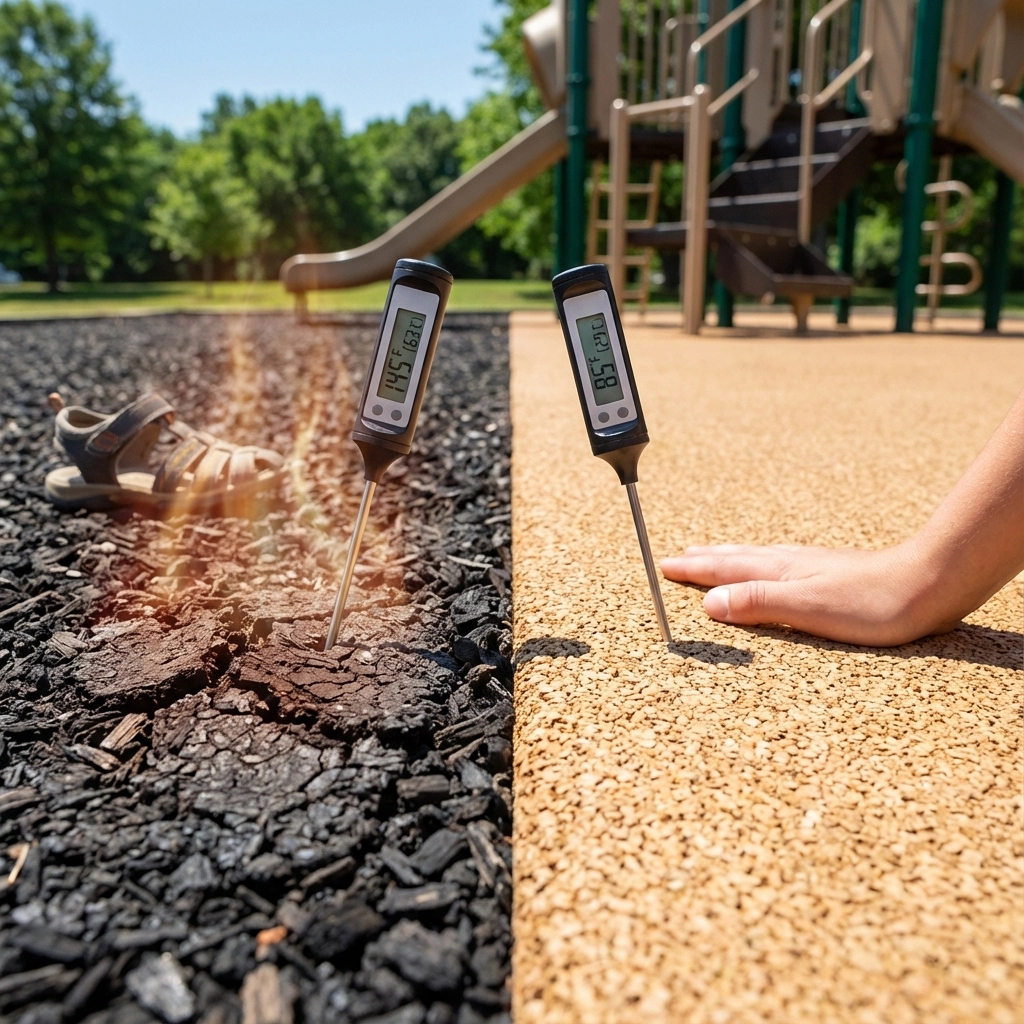
Temperature management represents a significant operational advantage for cork surfacing. The material’s natural insulating properties prevent the extreme surface heating that makes many playground surfaces unusable during hot weather. While traditional rubber surfaces can reach temperatures exceeding 150°F in direct sunlight, cork surfaces remain comfortable for children to walk on barefoot even during peak summer conditions.
Drainage performance eliminates many maintenance headaches associated with other surfacing materials. Cork’s natural permeability allows water to pass through the surface rather than pooling on top. This characteristic reduces slip hazards, prevents ice formation in cold climates, and supports natural groundwater recharge systems.
Maintenance requirements are minimal compared to traditional alternatives. Cork surfaces resist indentation from heavy equipment, don’t decay or break down like organic materials, and maintain their appearance without regular refreshing or replacement. The material is naturally fire-retardant and pest-resistant, eliminating concerns about insect infestations or fire hazards.
Accessibility and Inclusion Benefits
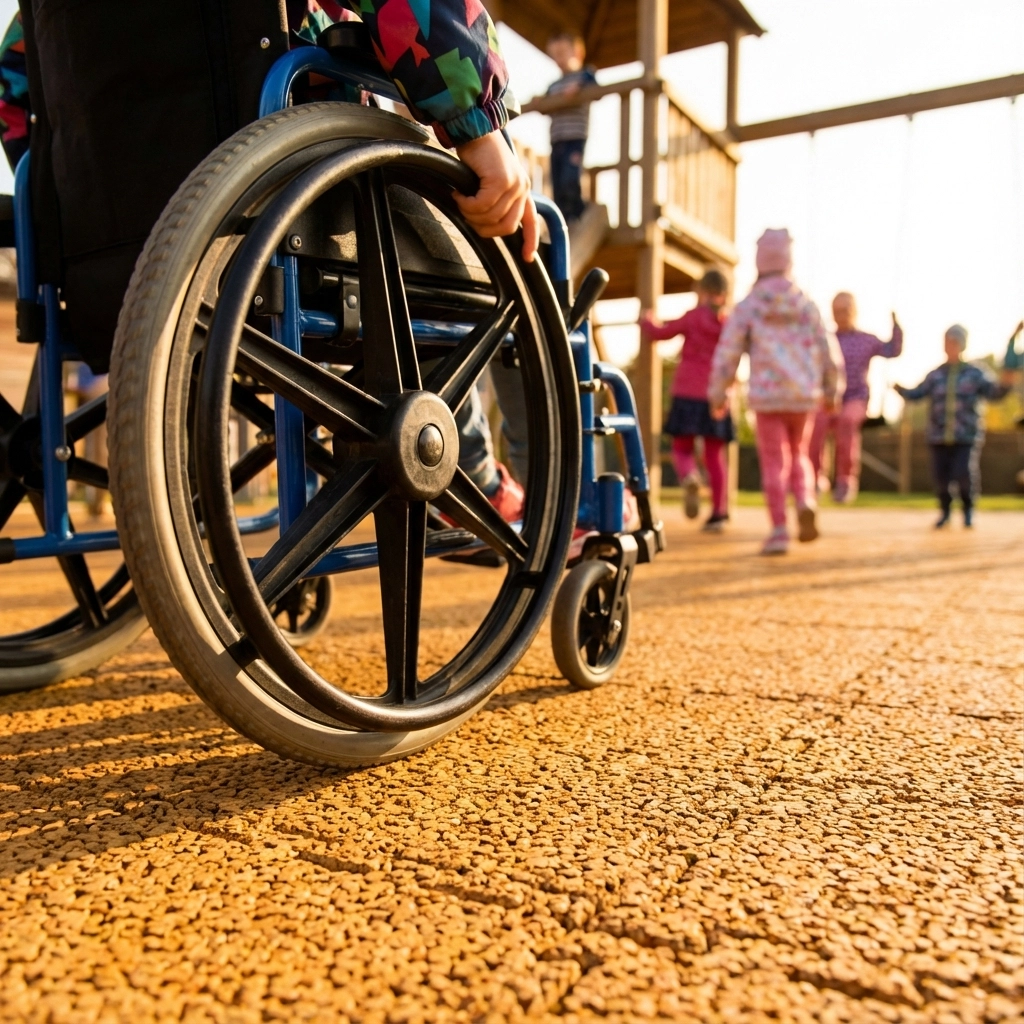
Modern playgrounds must serve children with diverse mobility needs and physical abilities. Cork surfacing provides excellent accessibility for wheelchair users, children with mobility devices, and those using assistive equipment. The firm, stable surface allows wheels to move smoothly while providing adequate traction for safe navigation.
The surface remains level and consistent over time, avoiding the uneven wear patterns that can create accessibility barriers with other materials. This stability benefits not only children with mobility challenges but also parents with strollers and maintenance equipment that needs playground access.
Comparing Cork to Traditional Surfacing Options
When compared to poured-in-place rubber surfacing, cork offers several distinct advantages. Both materials meet safety standards and provide good impact protection, but cork’s environmental profile significantly outperforms synthetic rubber options. Cork’s temperature management capabilities address one of the primary complaints about rubber surfaces – their tendency to become uncomfortably hot.
Rubber surfaces typically last 10-12 years before requiring replacement, while cork surfaces can maintain their properties for 15-20 years with proper installation. The longer lifespan, combined with lower maintenance requirements, often results in superior long-term value despite potentially higher upfront costs.
Wood chips and other loose-fill materials require constant maintenance, periodic replacement, and struggle with accessibility requirements. Cork eliminates these ongoing operational challenges while providing superior safety performance and weather resistance.
Addressing Implementation Challenges
Cost considerations represent the primary challenge schools face when evaluating cork surfacing. Initial installation costs may exceed those of basic rubber surfaces or loose-fill materials. However, lifecycle cost analysis often favors cork when accounting for longevity, reduced maintenance, and replacement frequency.
Supply chain considerations may affect project timing. Cork surfacing represents a newer market segment compared to traditional materials, potentially requiring longer lead times for material sourcing and specialized installation crews.
Climate compatibility should be evaluated for specific geographic locations. While cork performs well across diverse climate conditions, extreme environments may require additional considerations for installation methods or surface preparation.
What Schools Should Know Before Implementation
Safety certification must be verified for specific applications and equipment heights. Different playground equipment requires different critical fall height protection ratings, and cork surface thickness should be specified accordingly. Work with certified installers who understand ASTM 1292 testing requirements and can provide appropriate documentation.
Installation quality significantly impacts long-term performance. Proper site preparation, drainage design, and surface binding are critical for achieving the full lifespan and performance benefits that cork surfacing can provide. Choose contractors with specific cork installation experience rather than general playground contractors.
Budget planning should include lifecycle costs rather than just initial installation expenses. Factor in maintenance savings, extended replacement intervals, and potential utility savings from improved drainage performance when evaluating total cost of ownership.
Environmental goals alignment can provide additional justification for cork selection. Schools with sustainability commitments, carbon reduction goals, or environmental education programs find cork surfacing supports broader institutional objectives beyond playground functionality.
Making the Decision for Your School
Cork surfacing represents a significant advancement in playground design, offering a combination of safety performance, environmental benefits, and operational advantages that traditional materials struggle to match. The technology addresses real problems that schools face with conventional surfacing while supporting broader sustainability and educational goals.
The investment in cork surfacing pays dividends through reduced maintenance, extended lifespan, improved safety performance, and demonstrated environmental leadership. For schools ready to move beyond traditional surfacing limitations, cork provides a proven path forward that benefits children, communities, and the environment simultaneously.
Consider cork surfacing when your current surface needs replacement, when planning new playground installations, or when seeking to align playground infrastructure with sustainability initiatives. The combination of immediate benefits and long-term value makes cork an increasingly compelling choice for forward-thinking educational institutions.